AI Writes 90% of Claude Code's Code. How Does the Team Review It?
Anthropic recently shared the end-to-end AI code review workflow used by the Claude Code team, where 90% of the code is written by AI. It is well worth a look.
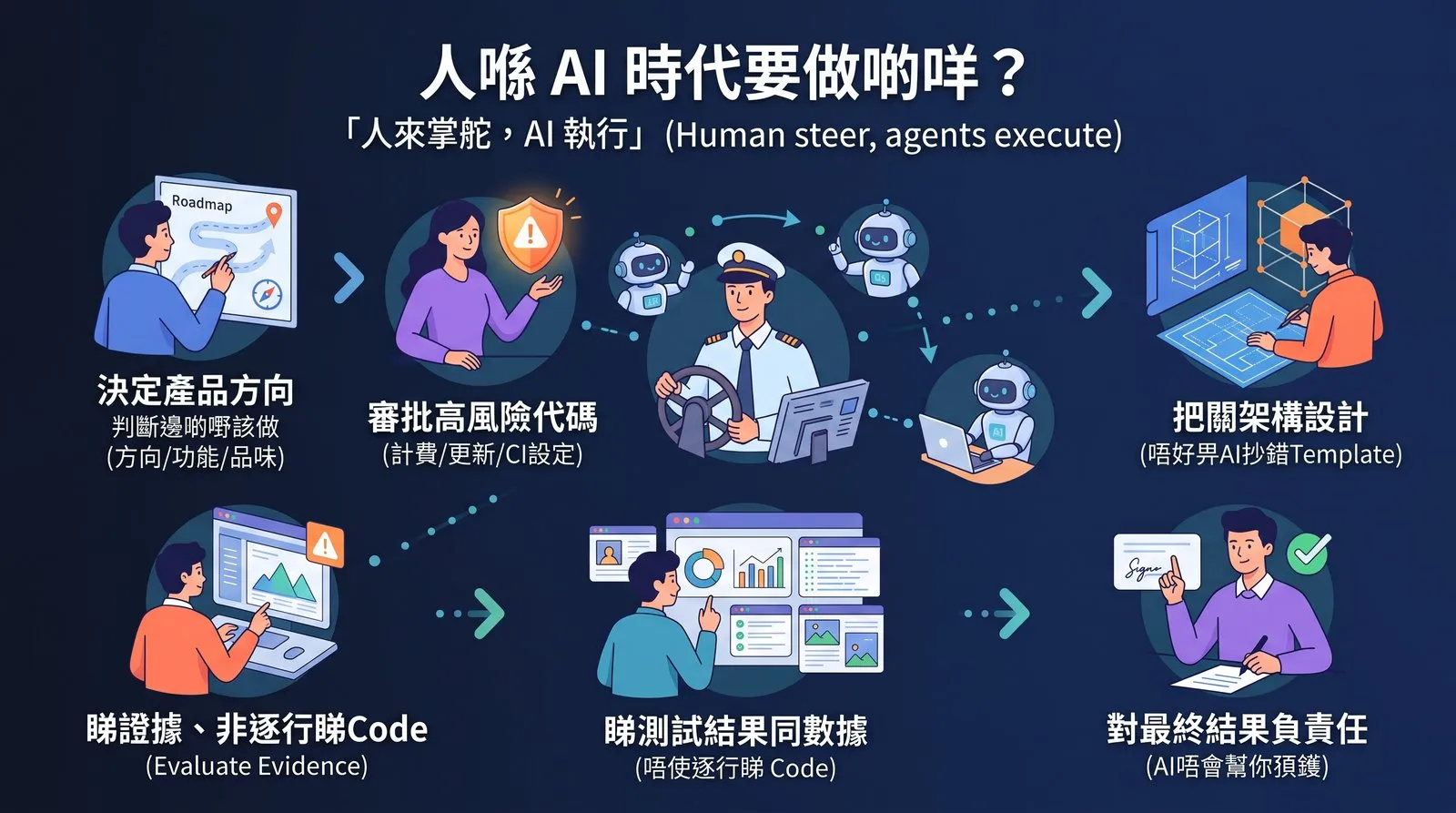
The whole workflow is built around “Human steer, agents execute”. Release and review are split into stages, each adding its own layer of checks:
- ✅ Before the PR: A brand-new AI agent with no context reviews the code. Because it has no memory of writing the code, it stays objective and readily catches blind spots.
- ✅ During the PR: Automated CI checks plus AI review. The AI filters out pointless feedback and caps the number of review rounds to avoid endless loops. Best of all, approval is tiered by risk: low-risk changes pass fully automatically, while high-risk ones (such as billing or architecture) need a human to approve.
- ✅ Merge and release: A merge queue keeps the main branch stable. Feature toggles let the change go to internal users first, then roll out gradually to everyone, with an immediate rollback if a bug shows up.
In short, in the AI era a developer’s job is no longer reading code line by line. It is guarding the architecture, approving high-risk changes and making the final call, while handing the heavy execution work to AI.
The five things engineers most need to do
1. Decide what is worth building (set the product direction)
Product direction, feature scope and “taste” are high-level judgements a machine cannot make. They have to come from people.
2. Approve high-risk code
Ordinary bug fixes and regular features can go through fully automated AI review. But high-impact code such as billing, auto-update or CI configuration must be approved by a human.
3. Guard the architecture
Architecture works like a template: once it is set, humans and AI alike follow it. If the architecture is wrong from the start, AI will keep copying that mistake everywhere, so core architectural design must be owned by people.
4. Review evidence, not every line of code
Review used to mean reading code line by line. Now it is mainly about the “evidence” the AI produces, such as test output, run results, screenshots or the AI’s own analysis, and using that to judge whether a change is sound.
5. Own the outcome
No matter who wrote the code, when something breaks in production, someone has to step up and take responsibility. AI cannot do that for you.
Source: Solving code review at Anthropic
#TechHK #SoftwareEngineering #AI #CodeReview #Anthropic